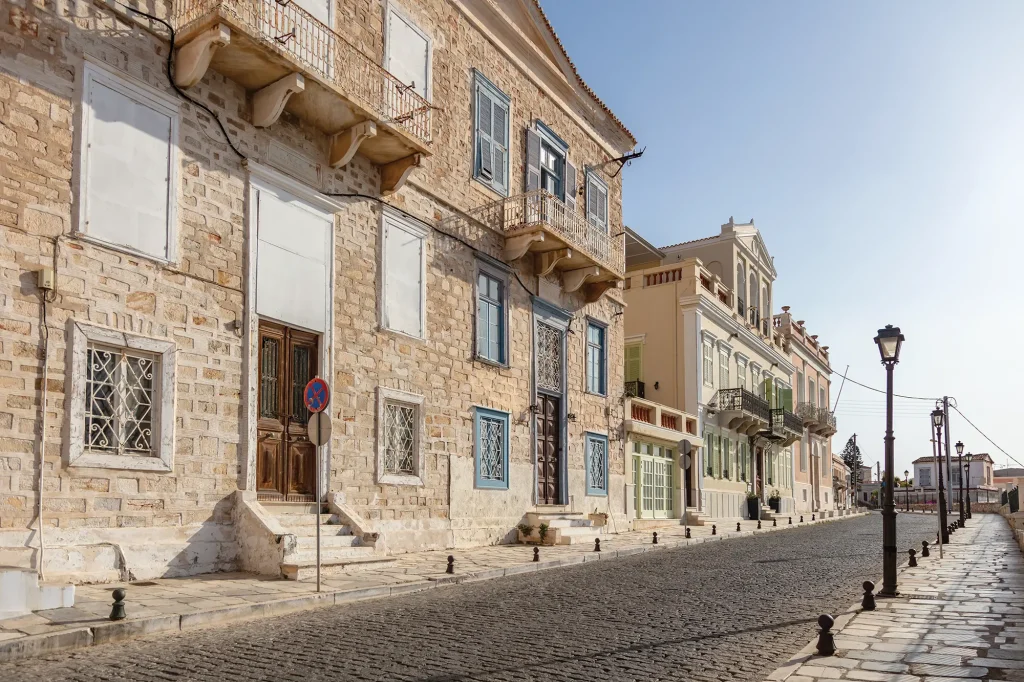
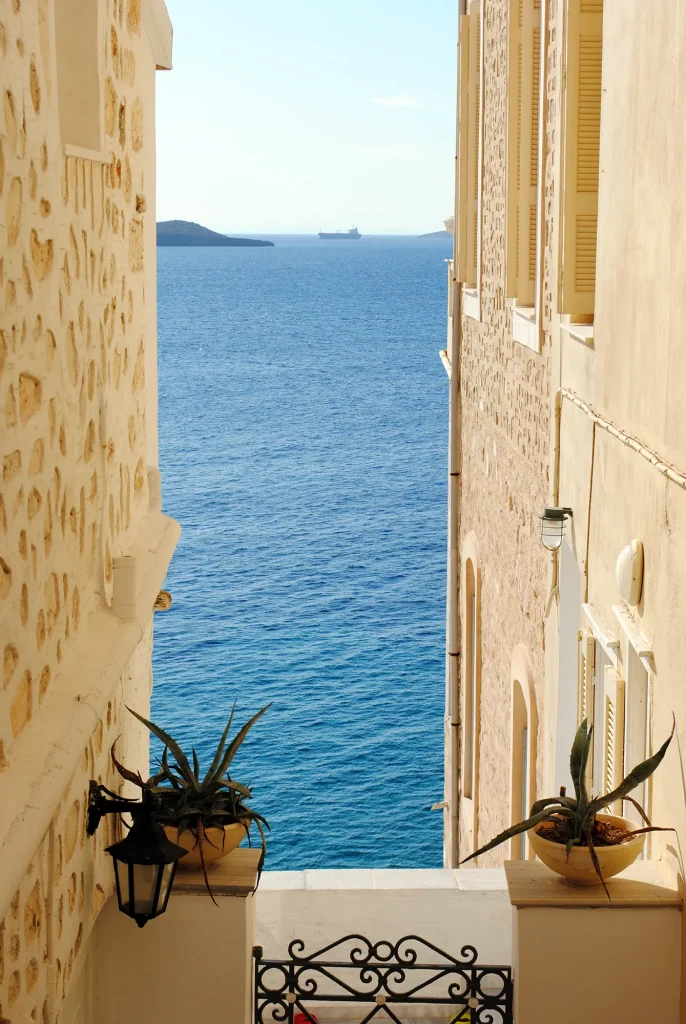
The contrasts and variations are striking. The neoclassical architecture of Ermoupolis, combined with its medieval labyrinthine alleys, Orthodox and Catholic churches, and an unparalleled natural landscape that marries land and sea.
The architecture of Ermoupolis is a rich blend of traditional and neoclassical elements, influenced by the Renaissance and 19th-century European trends. The first houses
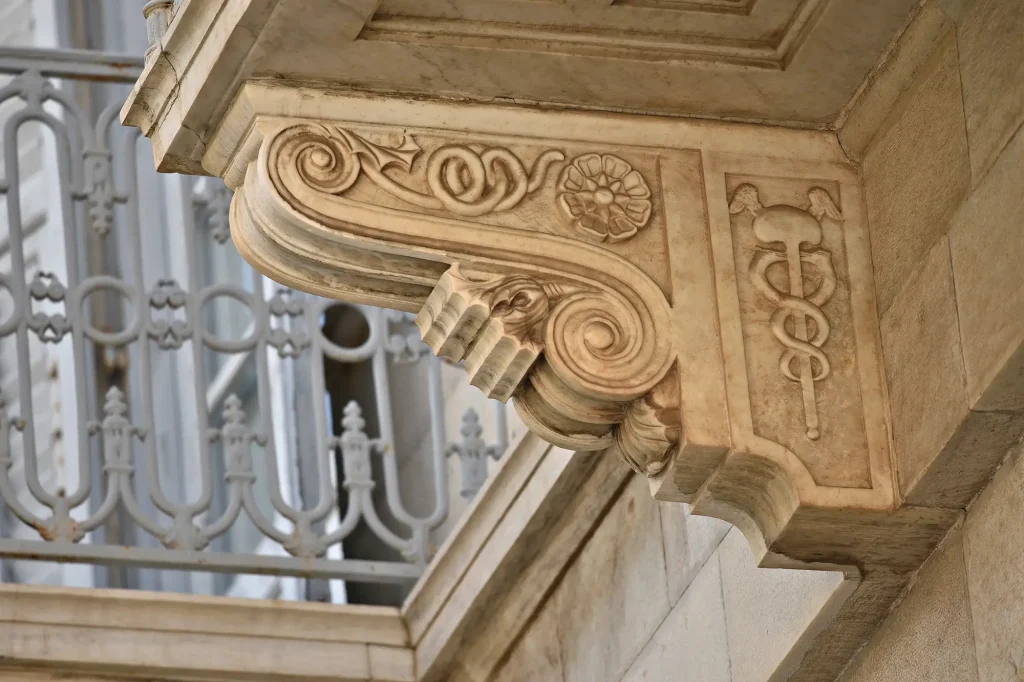
were built by refugees between 1821 and 1835, usually two-story buildings with Macedonian and Asia Minor characteristics. Wilhelmvon Weiler designed the first city plan in 1837, laying the foundation for the neoclassical city. From 1840 to 1860, building activity peaked with contributions from Bavarian, Italian, and Greek architects. Public buildings and private residences adopted the neoclassical architecture of Athens, while the painted decorations and sculptural works, mainly by Tinian and Italian artisans, add to the city’s unique character.
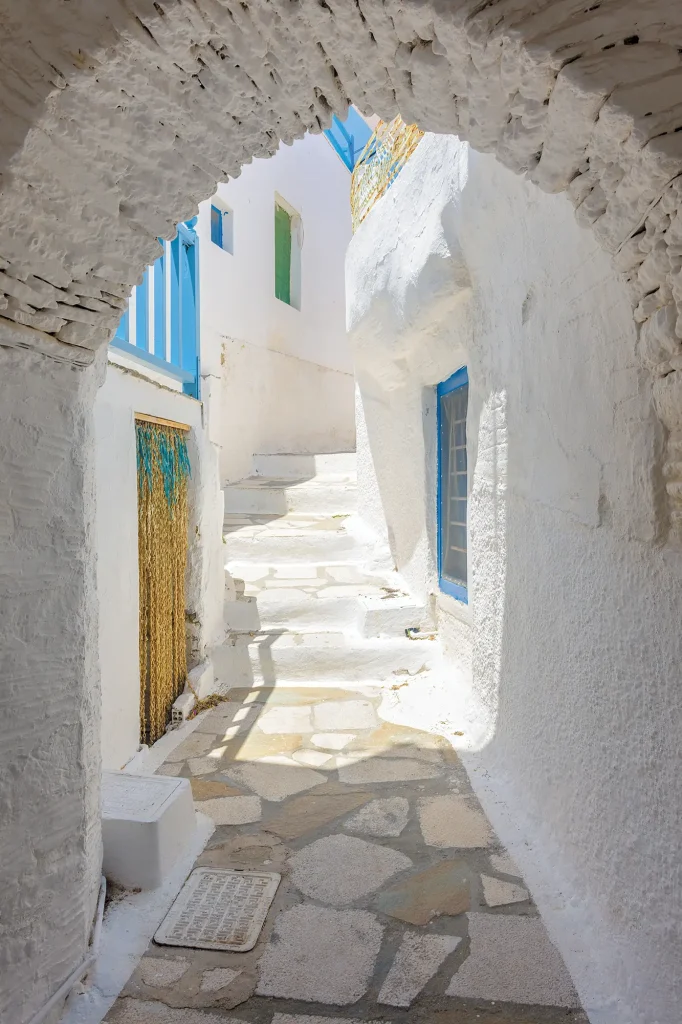
Ano Syros, built five centuries before Ermoupolis, represents anonymous vernacular architecture with two-story buildings, narrow alleys, numerous staircases, arches, and whitewashed houses in white or indigo. The courtyards are connected without fences, featuring wooden balconies, handmade chimneys, and colorful bougainvilleas that decorate and scent corners and courtyards. While Ano Syros is a fortified settlement designed for protection against raids, Ermoupolis became the largest industrial, economic, and commercial center of Greece at the time and the country’s foremost port, with a vibrant artistic and cultural scene.