
Gastronomy
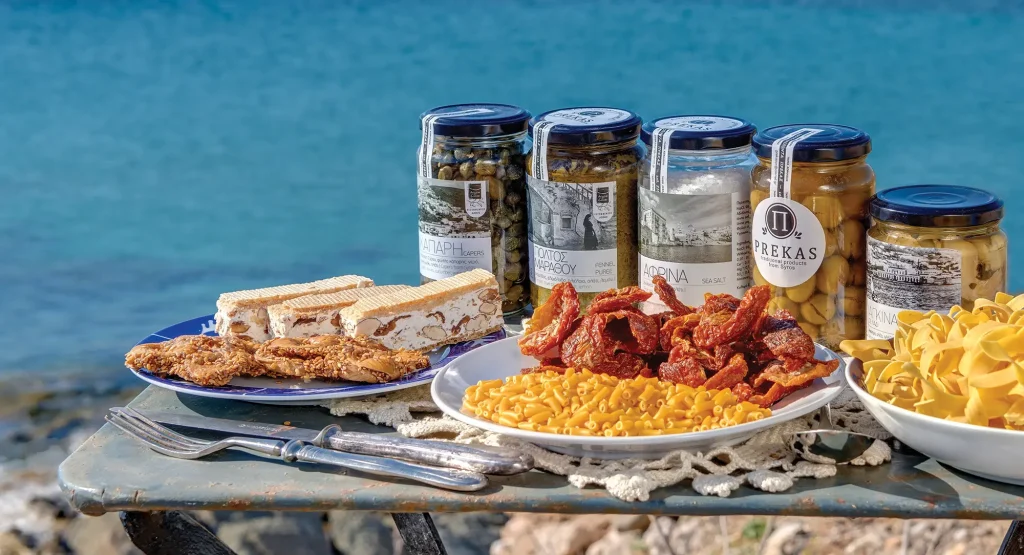
The gastronomy of Syros is a unique culinary mosaic that has developed through the island’s rich and multifaceted history. With its strategic location in the Aegean Sea, Syros has been a meeting point for different cultures and social classes, including aristocrats, rebetes, merchants, and farmers. Each group brought its own culinary traditions, contributing to the creation of a rich and diverse local cuisine.
The urban society of Syros, comprised of merchants from Chios and Smyrni, introduced elements from Western cuisines. For the high society of that time, gastronomy was a sign of social prosperity. It is no coincidence that the first cookbook in Greece was printed in Ermoupoli in 1828.. This cookbook contained one hundred recipes, not only referring to Venetian or Genovese cooking but also to methods from Germany, England, France, Spain, and the Netherlands.
In contrast, the food of the farmers was simple and based on local, seasonal products, such as wild greens, herbs, vegetables, legumes, and rarely meat. Refugees from the East, mainly from lower social strata, brought with them Eastern flavors, such as cumin and peppers.
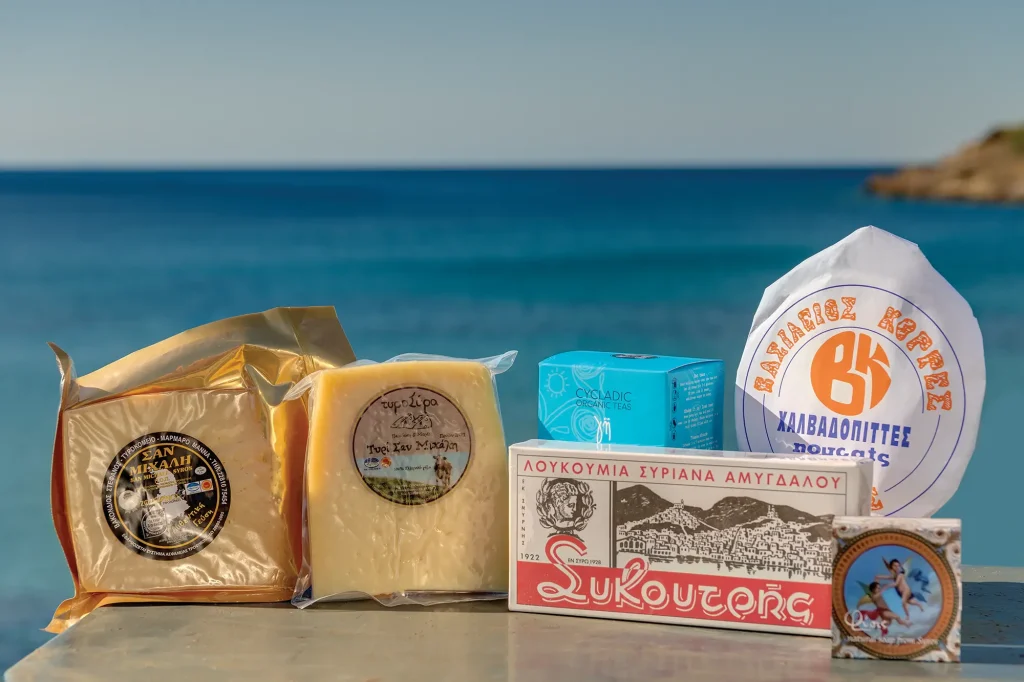
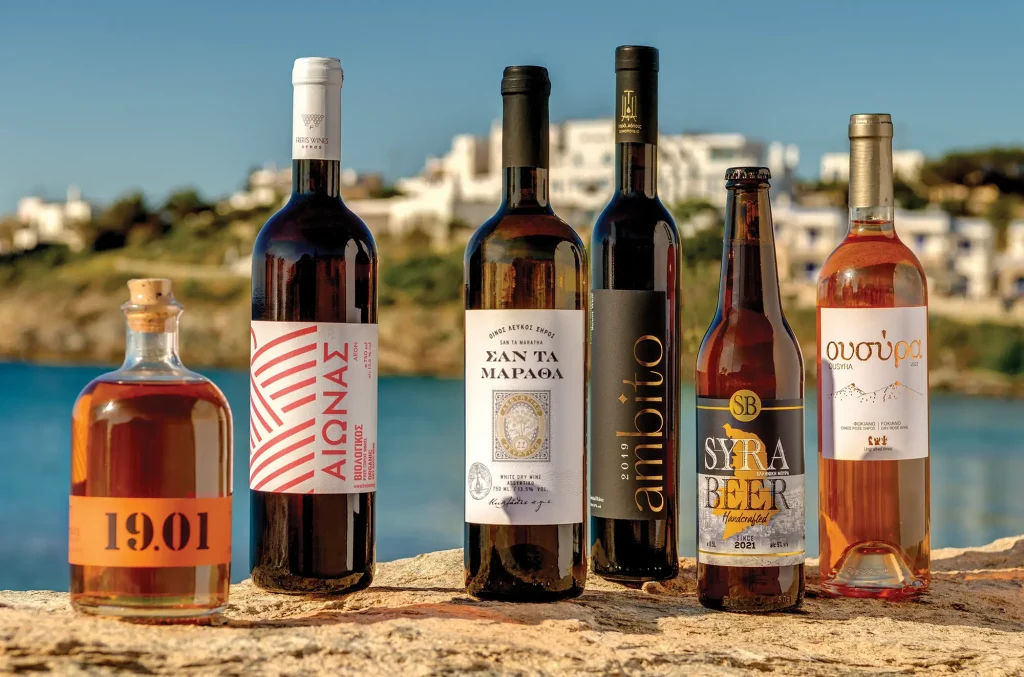
Significant is the influence of local housewives who worked as cooks in the mansions of urban families, contributing notes of local cooking while adopting techniques from European cuisine. In the era’s teahouses (80 in number), the lower classes and the underworld enjoyed simple and quick meals. This is perhaps where the first form of street food emerged, where with little money, people ate standing up, with fried potatoes, meatballs, and smelt served in a cone made from yesterday’s newspaper.
Syros managed to combine the flavors and techniques of the East and the West, creating a distinctive gastronomic exchange. This cultural blending is reflected in the dishes of Syros, where one can “taste” the island’s history and the influences of the different peoples who lived there. The contemporary cuisine of Syros, influenced by these multicultural roots, utilizes local ingredients and traditions, creating a unique gastronomic identity. Local products, such as Syros loukoumi and halvadopita, remain popular, while traditional recipes continue to evolve, keeping the island’s rich culinary heritage alive.